Audio guide
Galar cruise
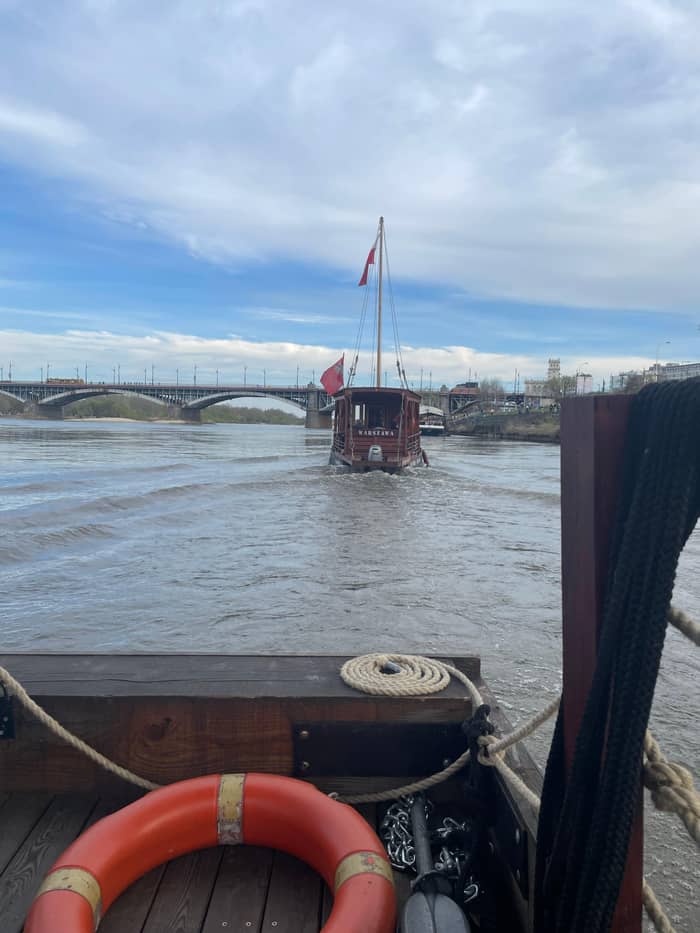
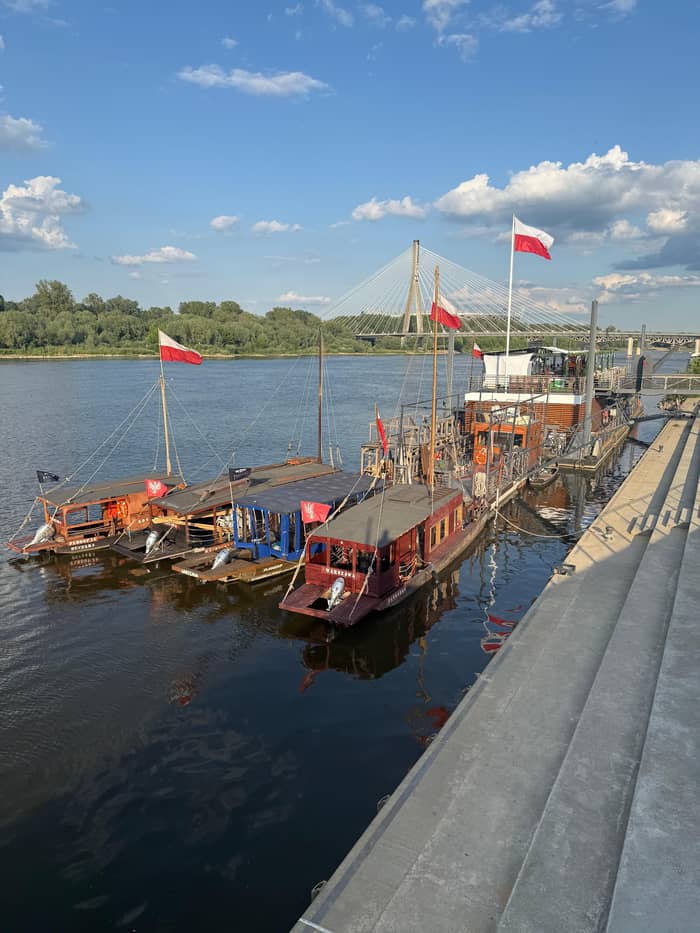
Wooden replica, open deck
- Length54 minutes
- MeetsMarina Warszawa
- Boat12 seats
Where is your stop
Galar cruise on the Vistula, 54 minutes
★ 4.5 · 1,927 user reviews
Check out 37 stops
Select a route, then tap a marker or stop to see its note and open Google Maps.
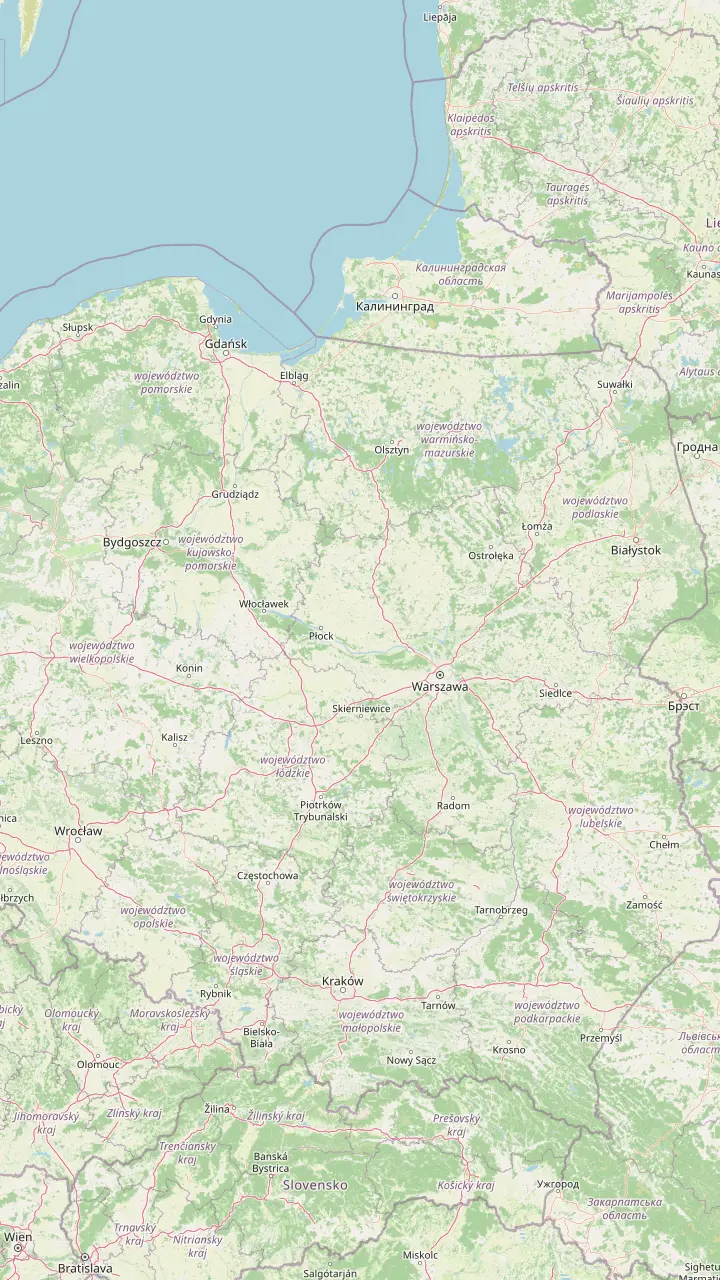
The capital of Polish rafting, where the Tanew meets the San; in 1993 its raftsmen covered 724 km to Gdańsk in 26 days.
Google MapsThe cathedral tower shows a raftsmen's clock with a single hand on its river side.
Google MapsGrain stored in these granaries on the Brda was loaded onto barges for Gdańsk.
Google MapsMonumental granaries reflected in the Vistula, best seen from the Klimek Tower.
Google MapsPoland's largest museum of the river's history; the permanent exhibition is free on Saturdays.
Google MapsOne of Europe's oldest and largest harbour cranes; its treadwheels lifted loads of up to 4 tonnes.
Google MapsIn 1643 the port of Gdańsk had 315 granaries; 3 rebuilt ones on this island now house the maritime museum.
Google Maps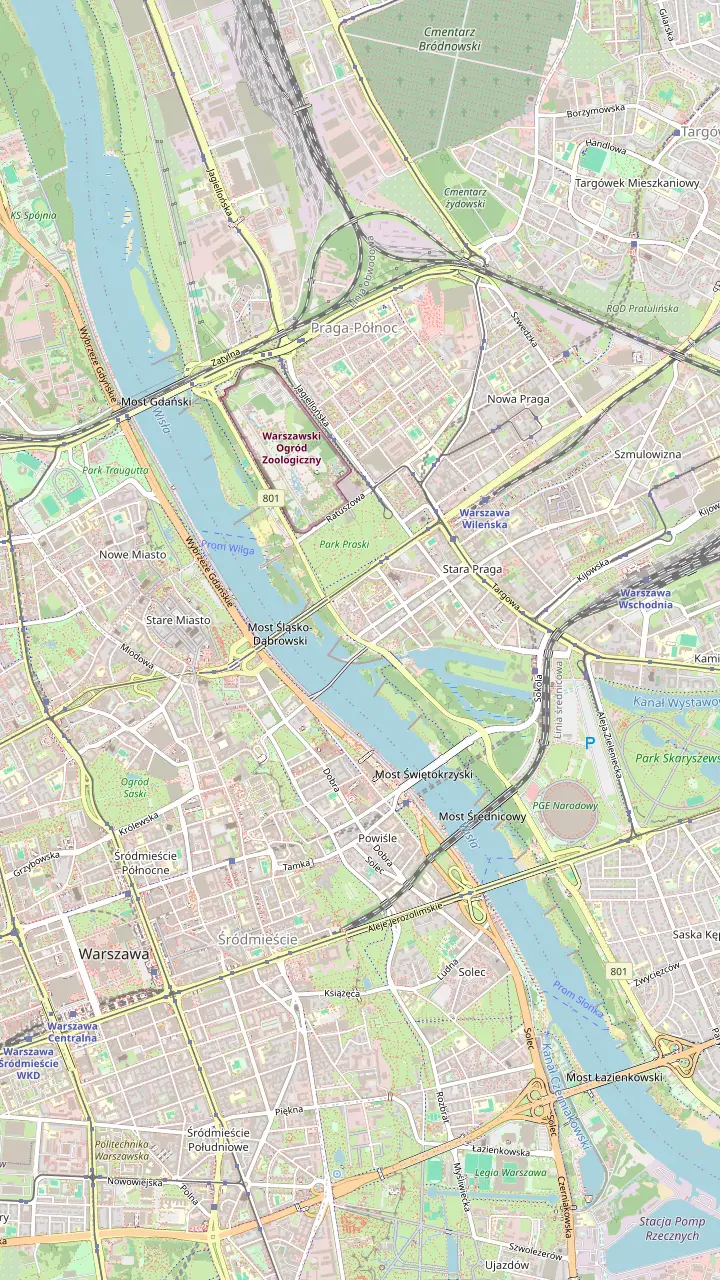
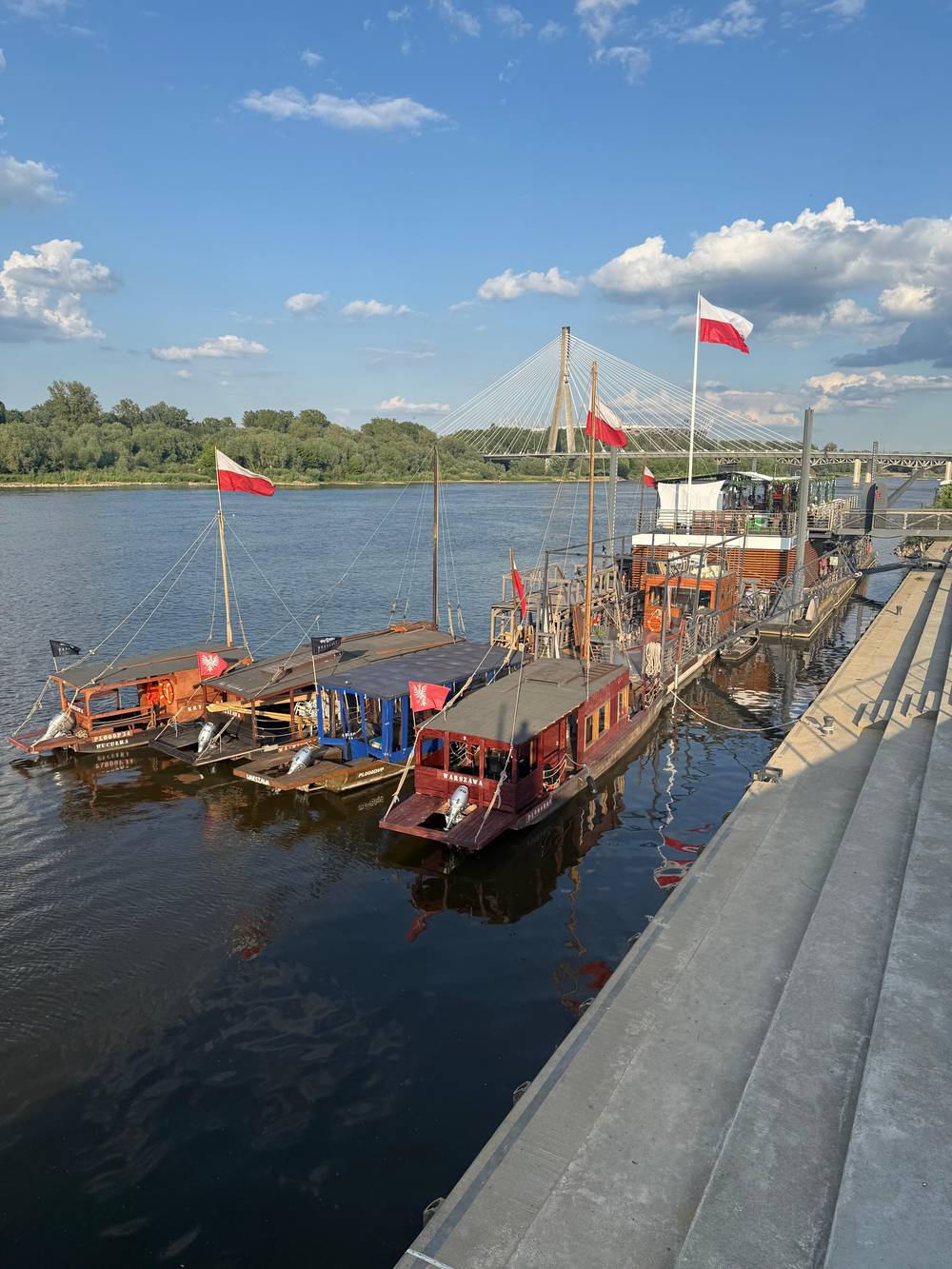
The brown double-decker barge about 300 m north along the boulevard from the Copernicus Science Centre stairs, where the galar cruises check in.
Google MapsA hands-on science centre where you run the experiments yourself; its free roof garden looks over the river and the stadium.
Google MapsA free roof garden, one of the largest of its kind in Europe; the upper garden closes from November to March.
Google MapsA pedestrian and cycling bridge, 452 metres long, opened in 2024.
Google MapsNamed on the galar route this site sells, on the way to the Old Town panorama.
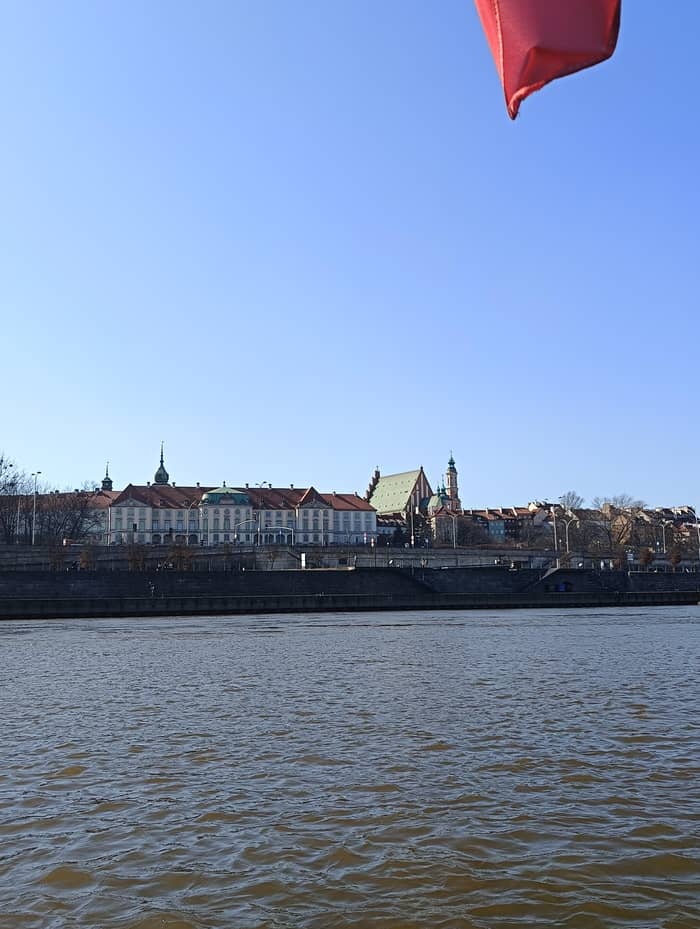
Google MapsThe castle above the river, one of the sights the galar route names.
Google MapsAt the foot of the Old Town: water, light and laser shows on summer weekend evenings; the Wilga ferry leaves from the Podzamcze pier nearby.
Google MapsThe northern end of the inter-bridge zone, one of the best stretches for birdwatching.
Google MapsAfter dark the Dzielnica Wisła neon sign hangs underneath; the most photographed Mermaid statue stands close by on the boulevard.
Google MapsBuilt over 100 years ago, with Mermaids on its tower and on the benches above the pillars.
Google MapsBuilt for the 2012 European Football Championship; at night it shimmers white and red.
Google MapsOn the right-bank stretch of the galar route this site sells.
Google Maps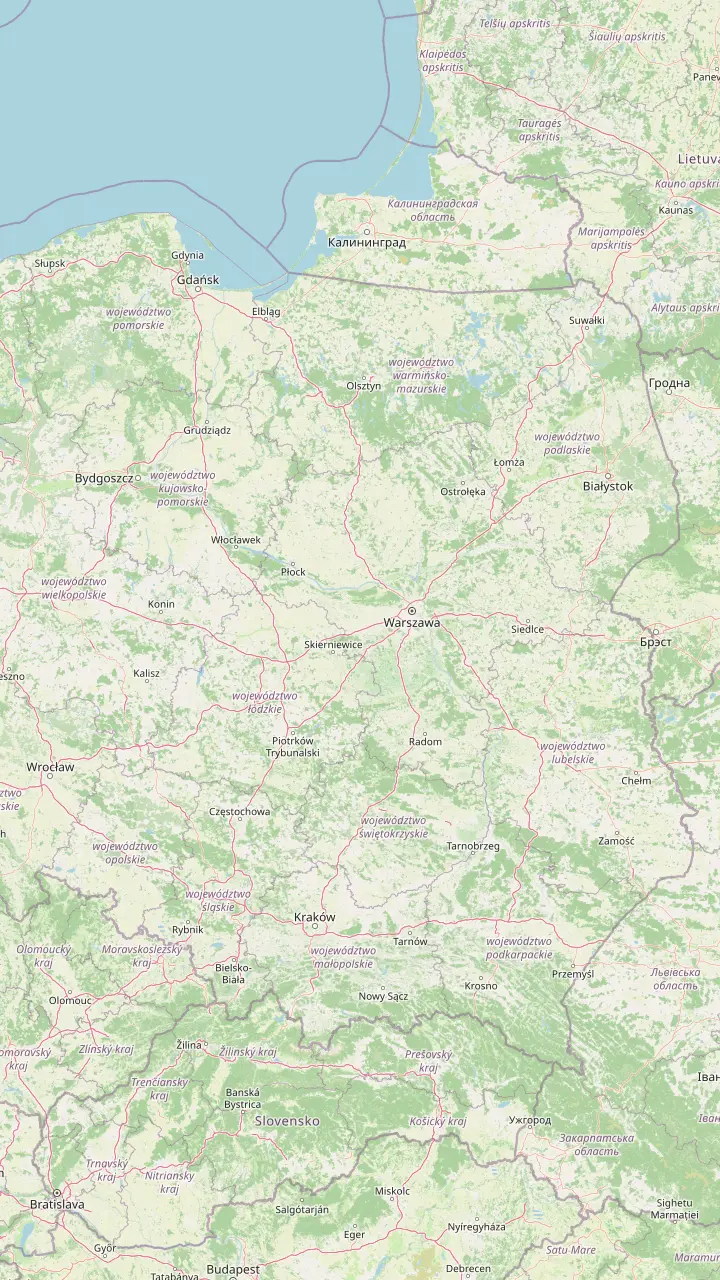
The Vistula's source streams rise on its western slope, at 1107 m and 1080 m above sea level.
Google MapsThe dam and reservoir in the town of Wisła, just below where the source streams meet.
Google MapsNear Kraków the river cuts a gorge through limestone at the Kraków Gate.
Google MapsThe end of the upper course, where the San joins the Vistula.
Google MapsThe narrowest and deepest part of the Vistula gorge, with 80 to 100 m between the valley floor and the plateau.
Google MapsThe capital's unofficial 19th district: boulevards on the left bank, a Natura 2000 area on the right.
Google MapsWhere the Narew joins and the middle course of the Vistula ends.
Google MapsA cathedral town high above the lower Vistula, between Modlin and Włocławek.
Google MapsThe dam here holds back Poland's largest reservoir by area.
Google MapsWhere the Vistula reaches the Gdańsk Bay of the Baltic Sea.
Google Maps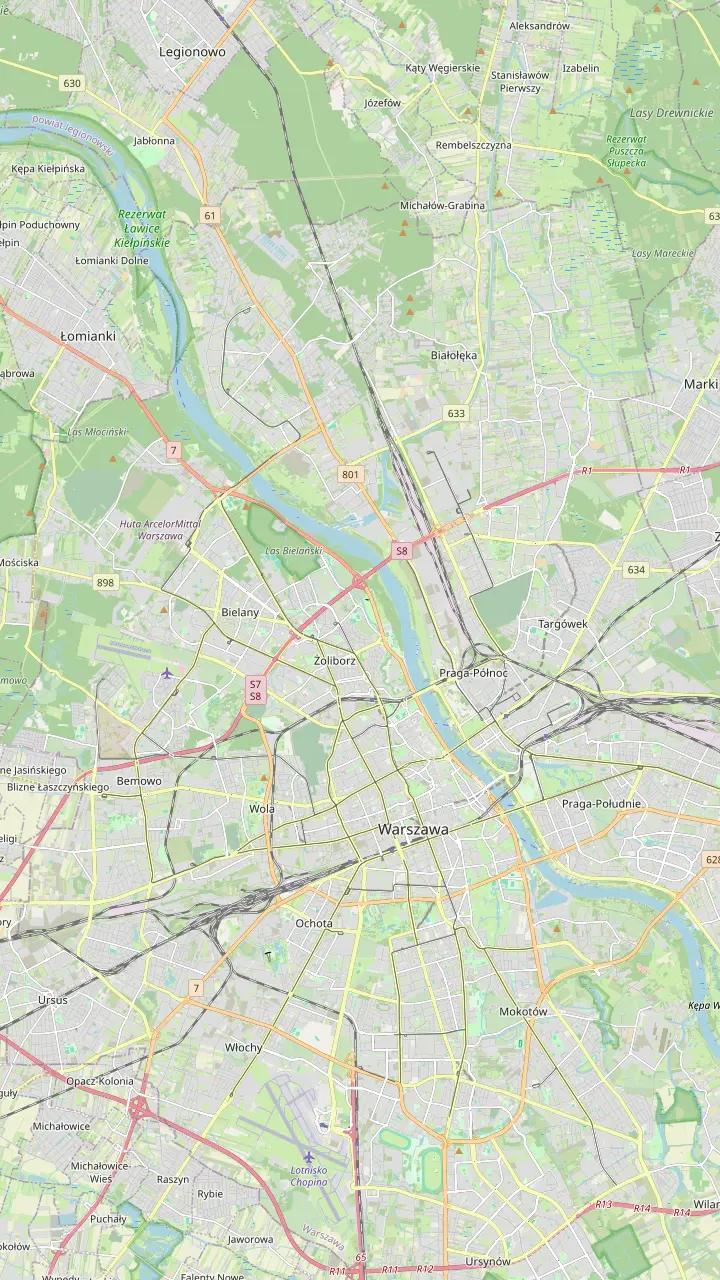
The W1 Słonka ferry crosses from Cypel Czerniakowski to Saska Kępa beach and takes 21 passengers.
Google MapsA quieter beach near the Łazienkowski Bridge, reached on foot or by the Słonka ferry.
Google MapsThe W2 Pliszka ferry crosses from the Poniatowski Bridge waterfront to Poniatówka.
Google MapsThe most popular beach in Warsaw, under the Poniatowski Bridge near the stadium.
Google MapsA beach near the Zoo with a view of the Old Town; the W3 Wilga ferry lands here.
Google MapsThe landing for the Dudek ferry across to Tarchomin, on the northern edge of the city.
Google MapsRent kayaks, paddleboards, rowing boats or a small motorboat that needs no licence.
Google MapsOne of the urban beaches where the Warsaw Beach Host lends sun loungers, balls and toys.
Google Maps© OpenStreetMap contributors, map data
Before your traditional galar cruise on the Vistula River, meet the boat: a flat-bottomed river vessel, the grain trade it served, the raftsmen and the people who revived it.
Editorial team, warsawrivercruise.click · Updated November 9, 2026 · Reading: 8 min
Essentials
A traditional galar cruise on the Vistula River puts you on a type of boat that once did the heavy lifting of the river. A galar is a wooden, flat-bottomed river vessel, and the replicas in Warsaw are modelled on galars of the 18th century, with a deck that is partly enclosed and partly open to the air.1,4 The flat bottom is the clever bit: it lets the boats sail at the lowest water levels and run straight up onto the Vistula's sandy beaches.4
The galar was only one member of a large family. The Greenery Authority lists the vessels now returning to the Warsaw river: the galar itself, plus the szkuta, the berlinka, the komięga, the dubas, the krypa, the kajlak, the koza, the łyżwa, the bat, the byk and the raft, or tratwa.5 Each name stands for a shape and a job on the old river, and the words still mean something to the builders and skippers who keep these hulls afloat. When an audio track or a skipper mentions a krypa or a byk, this is the vocabulary of river trade they are using.
Shallow draught is not just history. The Greenery Authority records that even when the Vistula's water level fell to 20 cm, boatmen on traditional craft still managed full-day cruises,6 something that depends on hulls built to float in very little water and on skippers who know every sandbar of the Warsaw stretch. It is the opposite of the large cruise ships, which the same authority says are few on the Vistula and often kept in port by low water.7
Wooden boats
| Boat | What it is | Trip |
|---|---|---|
| Galar | 18th-century replica, open and covered deck1 | 54 minutes |
| Gondola | Covered wooden boat | 55 minutes |
| Olęder | 12-metre bull-type boat20 | On request |
| Punt | 3-metre-wide flat boat21 | 1.5 hours21 |
| Loewentin | Steamboat replica from 1892, 4 decks22 | 1.5 hours22 |
Boats and trip lengths as the Warsaw Tourism Office and the listings give them; check each operator's season before you plan.23
For centuries the river was a road. The tourist office describes how goods and sand once reached Warsaw in wooden boats while grain travelled downstream to Gdańsk, in the days when the Vistula was a main route for transport.2 The National Maritime Museum places the height of that trade at the turn of the 16th and 17th centuries, when grain was the foundation of the Commonwealth's economy and its main port, Gdańsk, could stand beside the greatest cities of Europe.9
Grain needed storing at both ends of its journey. In Bydgoszcz, on the Brda, granaries held the harvest before it was loaded onto barges for Gdańsk,14 and in Grudziądz monumental granaries still stand reflected in the Vistula.15 At the far end, the port of Gdańsk counted 315 granaries in 1643, with 7 of them on the little island of Ołowianka.10 Those island stores held above all grain, salt, iron, anchors and millstones,16 a list that reads like the cargo manifest of a whole country.
The Gdańsk Crane is where the river trade met the sea. The Polish Tourism Organisation calls it one of Europe's oldest and largest harbor cranes,17 and its treadwheels, more than 6 m across, lifted loads of up to 4 tonnes.18,19 Today the Crane holds an exhibition named Gold for Grain, about Gdańsk's maritime power in its golden age.9 If your trip in Poland continues north, it closes the circle that a short galar ride in Warsaw opens.
River history
Middle Ages
Rafts carry wood, goods and people down the rivers.8
Golden age
Grain becomes the foundation of the Commonwealth's economy.9
1643
The port counts 315 granaries.10
18th century
Ulanów founds a guild of river pilots and helmsmen.11
1993
Ulanów rafters cover 724 km in 26 days.12
2022
Timber rafting joins the intangible heritage list.13
Grain went by boat, but timber went as rafts. The National Maritime Museum explains that farm produce and wood both travelled down the Vistula and the rivers feeding it: the produce aboard special river craft, the wood bound together as rafts.27 The men who steered them, the flisacy, were a trade of their own. UNESCO, which added timber rafting to its intangible heritage list in 2022, notes that the craft began in the Middle Ages with rafts carrying wood, goods and people on the current.13,8
The capital of Polish rafting was Ulanów, where the Tanew flows into the San, and its raftsmen floated timber all the way to Gdańsk.28 A guild of river pilots and helmsmen was set up there in the 18th century.11 Its raftsmen's Brotherhood of St Barbara was revived in 1991,29 and in 1993 its rafters ran the old route again from Ulanów to Gdańsk, covering 724 km in 26 days.12 UNESCO adds that crews bound for distant ports once lived and worked on their rafts for weeks at a time.30
Traces of the raftsmen line the river. In Toruń the cathedral tower carries a raftsmen's clock with a single hand, on the side that faces the Vistula.31 Near Warsaw, the Urzecze riverside region holds a Flis festival with a reconstructed raftsmen's camp called a binduga.32 And the rafts were enormous: UNESCO gives sizes of up to 600 metres long and 50 metres wide.33 Picture one of those floating islands drifting past the Old Town and the quiet modern river suddenly looks very crowded.
Choose your boat
Match what you care about most to a craft on the Warsaw river.
If I want the history
Book the galar
A replica of an 18th-century river boat with an audio guide.1
If I want shelter and privacy
Take the gondola
A covered wooden gondola; ask for food or drinks when booking.24
If I want to see boats being built
Visit a boatbuilding class
Held on Thursdays and Saturdays by Szkutnia po Godzinach.25
If I want the whole fleet
Come for Krypa Flash
Traditional boats perform on summer Sundays.26
If I want the grain story in full
Travel on to Gdańsk
The Crane exhibition covers the golden age of the port.9
On the water
Audio guide
Wooden replica, open deck
Sheltered
Covered wooden gondola
Shorter option
Galar-type wooden boat
The galars on the river today are a revival, not a survival. The Greenery Authority credits a group of boat owners, fascinated by the Urzecze riverside culture and by boatbuilding and rafting traditions, with starting the gradual return of inland navigation to the Vistula.70 Their first boats, known as drewniaki, were often built by the owners themselves and carried gaff and square sails.71 A striking share of Warsaw's boat owners are still non-governmental organisations.72
The galar cruise this site sells belongs to that movement. Its operator, the Szerokie Wody Foundation, is a Warsaw NGO formed in 2012 to promote the Vistula and its traditional boats,73 and it says eight of its wooden boats sail the river every day.74 The Polish Tourist Organisation and the portal Wirtualna Polska honored its cruises in their Best Tourist Product of Poland vote.75 A seat on a galar is a small vote for keeping an old craft alive on a modern river, and it is a pleasant way to cast it.
You can meet the craft on land too. The Szkutnia po Godzinach foundation holds boatbuilding classes on Thursdays and Saturdays,25 and the 2026 river calendar included, on May 23, the Warsaw Wooden Boat Festival.76 On summer Sundays the traditional boats perform Krypa Flash, a choreographed show set to music, at 5:01 PM.26 Time your galar cruise for one of those days and you will see a whole fleet of wooden hulls on the move, not just the boat you are sitting in.
Price your boat
Choose a craft, then how many are sailing.
Look at 4 options
Choose a craft, then how many are sailing.
≈
View≈
View≈
View≈
ViewFigures are GetYourGuide from-prices, translated at the ECB reference rate. The booking step shows what you pay exactly.
Here is what a traditional galar cruise on the Vistula River in Warsaw involves. It lasts 54 minutes, begins and finishes at the Marina Warszawa barge, and costs from €18; 1,927 travelers have rated it 4.5 on average. The barge is on Patton Boulevard, about 300 m north along the river from the stairs below the Copernicus Science Centre.34 Check in 20 minutes before departure; the boat itself comes alongside 5 minutes before the start. Reserve now and pay later if your dates are still moving.
On board there is an audio guide rather than a live guide, so bring your own headphones. The operator runs boats for 12 people each, the legal ceiling for a small passenger boat in Poland,3 which keeps the deck uncrowded and the views open on both sides. The boats are heated in the autumn and winter seasons, and the tourist office says cruises on traditional flat-bottomed boats run all year round,77 so a galar works in December as well as in July.
The places the listing names along the way are the Poniatowski Bridge, the Vistula Flotilla Boulevard, the stadium, Poniatówka beach, the Świętokrzyski Bridge, Port Praski, the Śląsko-Dąbrowski Bridge, the Old Town, the Royal Castle, the Copernicus planetarium and the Mermaid monument. The tourist office adds the natural woodland along the right bank to the view.78 Note one limit early: wheelchairs cannot come aboard, the operator says.69
Video
Dominique Vibez on YouTube · Playback files load only once you tap play.
Timber rafting in Austria, Czechia, Germany, Latvia, Poland and Spain originated in the Middle Ages, when rafts were used to transport wood, goods and people using natural water flows.
Before you board
The gondola cruise on the Vistula River is the galar's nearest rival. The tourist office describes a traditional, covered wooden gondola from the Aquatica fleet that leaves Patton Boulevard near the footbridge,79 and if you want a meal or a drink on board you ask for it when you book.24 The gondola listing lasts 55 minutes, meets on the Karski Boulevard quay facing the fountain park and costs from €24, with 192 reviews averaging 4.4.
These boats differ more in mood than in route. The gondola is covered throughout, an intimate boat for a quiet hour, while the galar mixes a covered and an open deck and leans on its history.79,4 Both pass bridges, the stadium and the Old Town panorama, as their listings show. If you want photographs in the open air, the galar's open deck wins; if you want shelter and a drink arranged in advance, the gondola is the better fit.
Warsaw has more wooden craft if you like to compare. The Olęder of Taxi Wisła is a 12-metre bull-type boat roofed against sun and rain, with a wide open deck behind,20 and a punt built along the lines of a traditional Vistula boat is 3 metres wide, enough for tables, on its 1.5-hour cruises.21 The Loewentin, a replica of a steamboat from 1892, takes up to 80 people on 4 decks.22 The galar stays the easiest way in: short, inexpensive and a direct line back to the grain boats.
FAQ
It leaves from and returns to the Marina Warszawa barge on Patton Boulevard.
The operator's boats take 12 people each, the limit for a small passenger boat.3
Wooden craft carried goods and sand into Warsaw; the grain went on to Gdańsk.2
Poland shares the listing with Austria, Czechia, Germany, Latvia and Spain.13
The operator says it cannot take guests in wheelchairs on board.69
Sources
Planning an hour on the Vistula? Ask a real person here.